
![]() |
![]() |
![]() |
|
For more
information, email The Green Willow Tree. Please
click
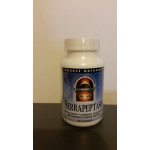
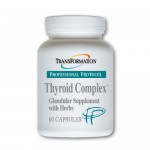
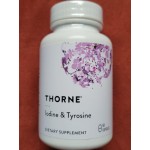
here to view our thyroid products. INTERACTIONS BETWEEN SELENIUM AND IODINE Selenium
and iodine are two minerals which are critically important in the proper
functioning of the thyroid. While the importance of iodine has been known
a long time, the importance of selenium has only been discovered and
explored since 1990. Much research is presently being conducted on the
functions of these two minerals in thyroid function and it is becoming
clear that there is an interaction between the two. Iodine has a seemingly
simple role in the thyroid-it is incorporated into the thyroid hormone
molecule. A
deficiency of iodine will cause hypothyroidism and if this is severe and
occurs during pregnancy, the offspring will be mentally damaged and is
called a cretin. Cretinism, or myxeodematous cretinism as it is sometimes
called, is not only caused by an iodine deficiency, but is also influenced
by a selenium deficiency. Iodine apparently has just one function in the
body-in the thyroid. Selenium,
on the other hand, performs many functions. At the beginning of the 1990s
it was discovered that the deiodinase enzymes which convert T4 (thyroxin,
the thyroid prohormone) into T3 (triiodothyronine, the cellularly active
hormone) and also convert T3 into T2, thereby degrading it, are selenium
enzymes (formed with the amino acid cysteine). This discovery has led to a
lot of research studies on the effects of selenium, iodine, and their
interactions. Selenium
also performs other important roles in the body. The most important of
these is probably as its role as the body's best antioxidant (anti-peroxidant).
It performs this role as part of glutathione peroxidase (GSHPx or GPX). As
part of GPX, selenium prevents lipids and fats from being peroxidized
(oxidized), which literally means that it prevents fats from going rancid
(this can be seen on your skin as "age spots" or "liver
spots" (autopsies show that skin "liver spots" are
accompanied by similar spots of peroxidized fats in the liver.) Therefore
selenium protects all of the cellular membranes, which are made up of
fats, from peroxidation. Peroxidation of cellular membranes reduces the
ability of the membrane to pass nutrients including minerals and vitamins,
so selenium deficiency is the first step toward developing the many
problems caused by nutrient deficiencies. Joel
Wallach considers a selenium deficiency combined with high intake of
vegetable oils (salad dressings, margarine, cooking oils) as the
"quickest route to a heart attack and cancer." It seems that the
body uses a lot of selenium to protect the fats from peroxidation.
Polyunsaturated fats which are hydrogenated or heated become the same as
rancid fats and large amounts of selenium are then needed to protect the
body. Consumption of these dietary fats can thus lead to a selenium
deficiency. Selenium
is also essential for the production of estrogen sulfotranserfase which is
the enzyme which breaks down estrogen. A deficiency of selenium can thus
lead to excessive amounts of estrogen, which may depress thyroid function,
and also upset the progesterone-estrogen balance. Wallach
also lists other effects of selenium deficiency: anemia (red blood cell
fragility), fatigue, muscular weakness, myalgia (muscle pain), muscular
dystrophy (white muscle disease in animals), cardiomyopathy (sudden death
in athletes), heart palpitations, irregular heartbeat, liver cirrhosis,
pancreatitis, Lou Gehrig's and Parkinson's diseases (mercury toxicity),
Alzheimer's Disease (high intake of vegetable oil), sudden infant death
syndrome (and possibly "breathlessness" in adults, jj), cancer,
multiple sclerosis, and sickle cell anemia. Selenium
is essential for the production of testosterone. A deficiency seems to be
involved in osteoarthritis. I've found studies linking selenium deficiency
to alopecia (hair loss) and to degeneration of the knee joint (seen in
Kashin-Beck disease). Since selenium is necessary to produce GPX which is
a major detoxifier of man-made and environmental toxins, selenium
deficiency can lead to chemical and drug sensitivities. These
are some of the non-thyroidal effects of selenium deficiency. The effects
of selenium deficiency on thyroidal health is even more interesting. One
study I read indicated that in experimental animals, selenium deficiency
will increase T3 in the heart. This may be the reason that selenium
deficiency causes heart palpitations and rapid heart beat, which is common
in thyroid disease. While
we've seen that selenium deficiency will interfere with T4 to T3
conversion and lead to functional hypothyroidism (low T3 phenomenon),
selenium plays another vital role in the thyroid as part of GPX. During
the production of thyroid hormone, hydrogen peroxide (H2O2) is produced.
H2O2 is important for the production of thyroid hormone, but excessive
amounts lead to high production of thyroxin (T4) and also damage to the
cells of the thyroid. GPX plays the extremely vital role of degrading H2O2
and thereby limiting hormone production and preventing damage to the
thyroid cells. This seems to be the main way in which selenium protects
the thyroid from sustaining damage which can lead ultimately to cancer. Without
selenium, the thyroid gland becomes damaged and it is through this
mechanism that the main selenium and iodine interactions are found. An
iodine deficiency will cause goiter, an enlargement of the thyroid gland
produced by the body in an attempt to increase hormone production from
limited amount of iodine. Selenium deficiency increases the weight of the
thyroid in experimental animals, and a selenium deficiency combined with
an iodine deficiency leads to a further increase in thyroidal weight
(bigger goiter). In African countries like Zaire, there are areas where
both iodine and selenium are very scarce in the soil (these deficiencies
seem to run parallel in most areas). Consequently a high percentage of the
people have goiters and hypothyroidism. An experimental attempt was made
to correct the selenium deficiency and the result was that the
hypothyroidism was made WORSE in the hypos and it produced hypothyroidism
in some euthroid subjects. This was entirely unexpected and the
experimenters issued a warning about supplementing with selenium (and not
iodine) when both deficiencies exist concurrently. The
body has a compensatory mechanism to maintain T3 levels when iodine is
deficient--it increases the production of the deiodinase Type I enzyme
(DI-I). This is not a small increase, but has been shown in cattle to be
an increase of 10-12 times. This increase in ID-I increases the conversion
of the existing T4 to T3 to maintain T3 levels, but also increases the
conversion of T3 to T2 (the degraded by-product of T3). Because of the
iodine deficiency, T4 is not replenished and T3 ultimately decreases from
the lack of sufficient T4 leading to a worsening of the hypothyroidism. This
result is made worse by another phenomenon which hasn't been thoroughly
studied: a selenium deficiency causes an iodine deficiency to get worse.
This may be a protective adaptation by the body to limit the damage caused
to the thyroid when selenium is deficient and iodine is adequate. Let's
examine this part of the interaction. We've
all heard that many doctors tell hypo patients, especially those with
Hashimoto's thyroiditis, not to take iodine because it can aggravate their
condition. The reason seems to be that selenium protects the thyroid gland
from oxidative damage and this damage can increase significantly if iodine
is supplemented. Taking iodine will increase thyroid hormone production
and the production of H2O2 which damages the thyroidal cells. The lack of
selenium prevents GPX from being able to protect the cells from this
oxidative damage. While I doubt if most doctors realize why iodine should
be restricted (it certainly seemed counter-intuitive to me at first), they
have learned through experience that iodine can increase the thyroid
damage in Hashimoto's. The information that selenium should be
supplemented along with iodine is so new that most of them are unaware of
it. Here's
what we have: Studies have shown that if iodine is low, selenium must also
be kept low to prevent the hypothyroidism from becoming worse (from
increased DI-I and T4 depletion, as explained above.) So if both minerals
are low, then the person is hypo and gets a goiter, but the damage to the
thyroid is kept to a minimum. More severe problems happen when either
selenium or iodine is high and the other is low. If selenium is high and
iodine low, then T4 to T3 to T2 conversion is accelerated without T4 being
replenished, leading to a worsening of the hypoT. If iodine is high and
selenium is low, then H2O2 is not degraded by GPX. Since H2O2 drives the
thyroid hormone production, then the thyroid over-produces thyroid hormone
(Grave's hyperthyroidism), the thyroid is damaged from the oxidation by
the H2O2, and the end result is that the damaged thyroid ultimately
decreases activity and hypothyroidism results (Hashimoto's thyroiditis).
This could explain the observed progression of Grave's to Hashimoto's. If
a selenium deficiency causes an iodine deficiency, leaving you both
selenium and iodine deficient, and supplementing with either selenium or
iodine causes severe problems, then the only solution is to supplement
both selenium and iodine simultaneously and gradually. Even then you could
experience an immediate boost (from increased conversion of T4 to T3) with
a subsequent letdown (lack of T4 production because of insufficient iodine
or other necessary nutrient). You have to be prepared to ride out the
tough times and continue increasing the selenium and iodine until those
two deficiencies are corrected and the respective metabolic pathways are
back working properly. Everything
that I've read about selenium indicates that it is absolutely essential
for proper functioning of the thyroid. A deficiency of selenium may lead
to either hyperthyroidism or hypothyroidism. I've always wondered if high
intake of selenium can lead to hyperthyroidism and finally found someone
who did the experiment. They found that a high intake of selenium will not
increase T4 production and lead to hyperthyroidism. If
a person has hyperT, then it looks like taking selenium without iodine
will result in a decrease in production of T4 (although there may be an
initial transient increase in T4 to T3 conversion and hence higher T3). I
would suggest to start with a small amount of selenium methionine (about
50 mcg) and gradually increase it. I cannot see any way that thyroid
function can be normalized without selenium. For
hypos the important message is that a selenium deficiency may cause an
iodine deficiency, so that even though you are taking iodine you may not
be assimilating it unless selenium is also being taken. This would explain
how people can have iodine deficiencies even though salt and many foods
have iodine added. Supplement with both iodine and selenium. I would
recommend starting with 100 mcg of selenium and one kelp tablet and
gradually work up to 400-600 mcg of selenium and 2-4 tablets of kelp. [Note from the Green Willow Tree: Our research indicates that there is an upper safety limit of 400 mcg./day for selenium, and we do not recommend taking more than that amount. Also, kelp is extremely high in iodine, which is good for the short term. However, excess iodine consumption long term can actually depress thyroid function. Dulse, bladderwrack, and Irish moss--the seaweeds found in Thyodine--are safer, in our opinion, for long term use.] While
I've found research on the interactions of iodine and selenium, there are
two other minerals which need to be studied for their interactions with
these two: zinc and copper. I found one study which examined the complex
interactions of selenium, iodine, and zinc (there are interactions), but
none which have looked at all four minerals in a 4 X 4 factorial design.
Now that would be an interesting study! Hopefully someone will do that
soon. I
think one lesson from studying the interactions of selenium and iodine is
that the interrelationships between minerals are very complicated.
Supplementing with one or two can cause further problems. You have to make
sure that you correct every deficiency. Health is built from a chain of
nutrients and, like a chain, health cannot be accomplished if one nutrient
is missing. Sometimes it's complicated putting the chain back together
without running into problems (like supplementing with either selenium or
iodine, but not both), but every deficiency has to be corrected. --
John The
information in this article is for educational purposes only, and is not
intended as medical advice.
| ||||
![]() All products come with instructions for use. *These statements have not been evaluated by the Food and Drug Administration.
![]() 34 Rocky Ridge Rd. Asheville, NC 28806 Phone: 877-968-4337 or 828-665-3095 Fax: 208-330-2445 info@greenwillowtree.com (product questions) customerservice@greenwillowtree.com (order questions) |